Website Design vs Website Development: What's the Difference in 2026?
Building a professional website is an essential step for businesses looking to establish credibility, reach new customers, and strengthen their digital presence.
However, when researching website services, business owners frequently encounter two terms: website design and website development.
Although these terms are often used interchangeably, they describe different aspects of creating a website.
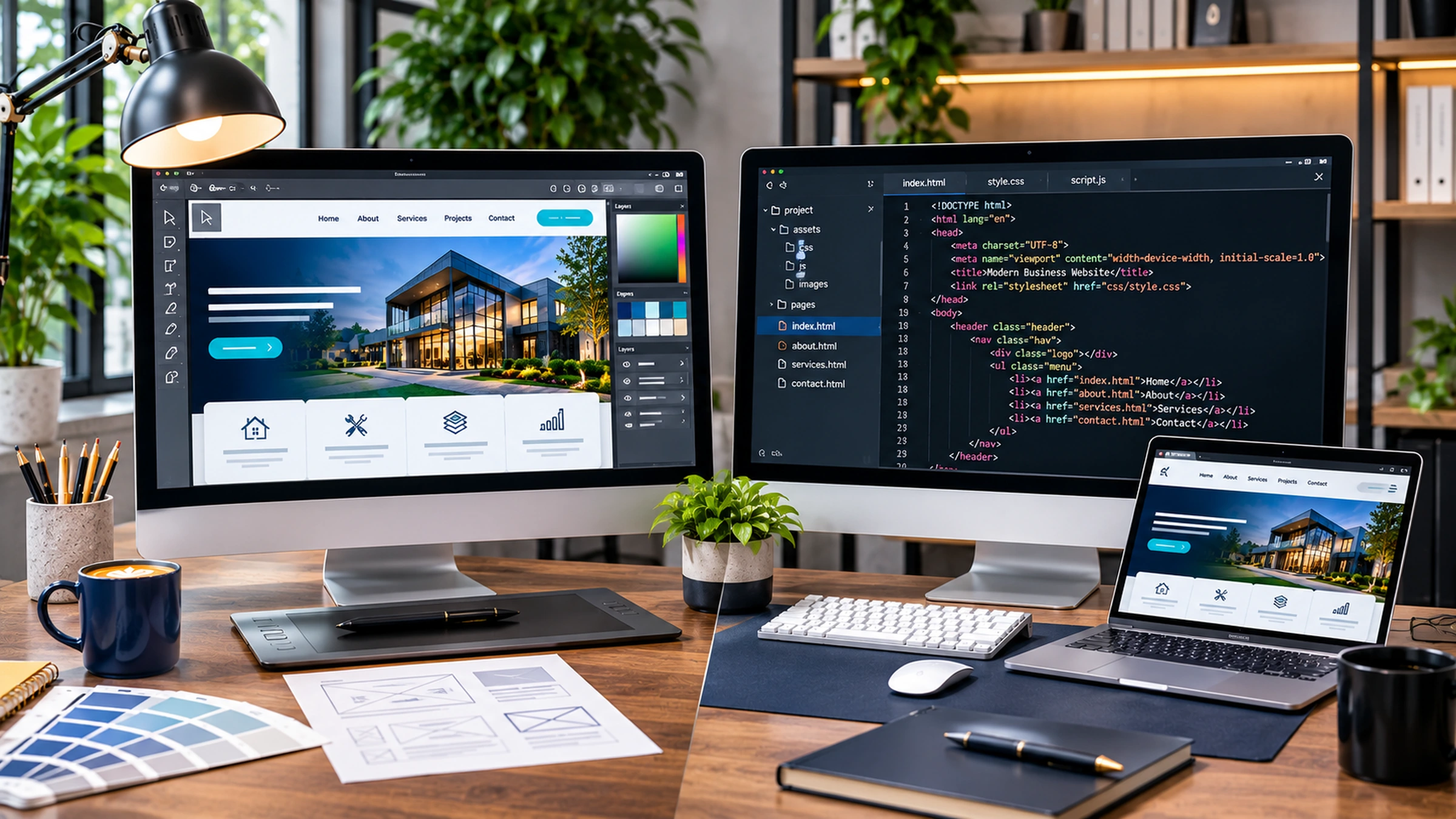
Website design focuses primarily on how a website looks, feels, and guides visitors. Website development focuses on building the technology and functionality that make the website work.
Both are important for creating a professional digital experience.
Whether you're starting a new business, planning an online store, or redesigning an existing website, understanding these differences can help you choose the right services and make better investment decisions.
In this guide, Modevo Design explains website design vs website development, the responsibilities involved in each process, and how both contribute to creating a successful business website.
1. What Is Website Design?
Website design is the process of planning and creating a website's visual appearance, layout, and user experience.
It involves deciding how information should be organized, how visitors navigate between pages, and how the website represents the business's visual identity.
A professional website designer considers both aesthetics and usability.
For example, a business website should look attractive while making it easy for visitors to understand the company's services and contact the team.
Key Elements of Website Design
Visual Layout
Designers organize images, headings, buttons, text, and other elements into a clear page structure.
Color Palette
Website colors should reflect the business's branding while maintaining readability and accessibility.
Typography
Fonts influence the website's personality and help establish a clear content hierarchy.
User Interface (UI)
UI design focuses on the appearance and arrangement of interactive elements such as navigation menus, buttons, and forms.
User Experience (UX)
UX design considers how visitors interact with a website and how easily they can accomplish their goals.
Responsive Design
Website layouts should adapt to smartphones, tablets, laptops, and desktop computers.
These elements work together to create an engaging and practical website experience.
Businesses seeking a professional visual presentation can explore Modevo Design's website design services.
2. What Is Website Development?
Website development is the technical process of creating and maintaining a functional website.
Developers implement the website's layouts, interactive features, content management systems, and underlying functionality.
While designers typically focus on the visual and experiential aspects, developers ensure that the website operates correctly.
For example, a designer may create the appearance of a shopping cart, while a developer implements the functionality needed to add products, calculate totals, and process orders.
Common Website Development Tasks
Building responsive web pages
Implementing navigation and interactive elements
Creating contact forms
Developing content management functionality
Integrating payment gateways
Connecting databases
Building customer accounts
Implementing booking systems
Improving website performance
Testing technical functionality
Some professionals specialize in either design or development, while others work across both disciplines.
For more information about professional web solutions, visit Modevo Design's website development page.
3. Website Design vs Website Development: Key Differences
Although both disciplines contribute to the final website, their responsibilities are different.
| Feature | Website Design | Website Development |
|---|---|---|
| Main Focus | Appearance and user experience | Functionality and implementation |
| Primary Goal | Create intuitive, attractive layouts | Build a working website |
| Common Deliverables | Mockups, prototypes, design systems | Functional pages and software |
| Core Skills | UI, UX, typography, layout | Programming, integration, testing |
| Common Tools | Figma, Adobe creative tools | Code editors, frameworks, databases |
| Main Concern | How users experience the interface | How the system operates |
| Collaboration | Works with developers and stakeholders | Works with designers and stakeholders |
Successful projects require collaboration between visual design and technical implementation.
A website may look beautiful but perform poorly if development is weak.
Similarly, a technically functional website can frustrate users if its design is confusing.
4. What Does a Professional Web Designer Do?
A professional web designer creates the visual and structural direction of a website.
The process often begins with understanding the client's business, target audience, and project goals.
Research and Planning
Designers review the business's requirements, competitors, brand identity, and user needs.
Wireframing
Wireframes are simplified page layouts that show how website content and interface elements will be organized.
They help teams establish a logical structure before applying detailed visual styling.
Visual Design
Designers develop the website's colors, typography, imagery, spacing, and overall appearance.
Interactive Prototyping
Prototypes can demonstrate how visitors will navigate pages and interact with important elements.
Responsive Layouts
Designers plan how the website should adapt to different screen sizes.
Design Handoff
The final designs are shared with developers along with relevant specifications and assets.
A well-planned design process reduces ambiguity and helps create a more consistent final product.
5. What Does a Website Developer Do?
A website developer converts design requirements into working website functionality.
Depending on the project, development may involve front-end, back-end, or full-stack work.
Front-End Development
Front-end development focuses on the parts of the website visitors interact with directly.
Common technologies include:
HTML
CSS
JavaScript
Front-end frameworks and libraries
Front-end developers implement layouts, responsive behavior, navigation, animations, and interactive elements.
Back-End Development
Back-end development focuses on server-side functionality and data processing.
It may include:
Server-side programming
Database management
User authentication
Content management
Payment integrations
Application programming interfaces
Business logic
Full-Stack Development
Full-stack developers work across both front-end and back-end functionality.
They may build complete website features involving user interfaces, server logic, and databases.
The technologies selected depend on the project's complexity and requirements.
6. Why Website Design and Development Must Work Together
A successful website needs both thoughtful design and reliable functionality.
Consider an online clothing store.
The designer creates the storefront layout, product cards, navigation, and checkout interface.
The developer implements the product catalog, shopping cart, inventory functionality, payment processing, and order management.
Without effective design, customers may struggle to navigate the store.
Without reliable development, customers may experience errors when adding products or completing purchases.
Benefits of Combining Both Disciplines
Consistent visual presentation
Better website usability
Responsive functionality
Clear customer journeys
Reliable interactive features
Easier content management
More maintainable website architecture
This is why professional website projects benefit from coordination between creative and technical work.
For businesses planning to sell products online, Modevo Design's e-commerce development services cover online shopping solutions.
7. The Role of UI and UX Design
User interface and user experience design are important aspects of modern website projects.
Although the terms are related, they are not identical.
UI Design
UI design focuses on the appearance of interactive elements.
Examples include:
Navigation menus
Buttons
Forms
Product cards
Icons
Dropdown menus
Mobile interfaces
UX Design
UX design focuses on how people use a website.
It considers questions such as:
Can visitors find information easily?
Is the navigation intuitive?
Are important actions clearly presented?
Can users complete forms without confusion?
Does the website work across different devices?
A polished interface should support a practical user experience.
For example, a visually attractive checkout page may still need improvements if customers cannot understand shipping options or encounter confusing form errors.
Good UI and UX design help reduce unnecessary friction.
8. Website Design vs Development Costs in 2026
Website project costs vary depending on the scope of design and technical work.
A simple informational website typically requires fewer resources than a custom e-commerce store or web application.
Factors Affecting Website Design Costs
Number of unique page layouts
Brand identity requirements
Custom graphics and illustrations
UX research
Interactive prototypes
Mobile design variations
Design revisions
Factors Affecting Website Development Costs
Number of website pages
Content management functionality
Database requirements
Custom integrations
Payment systems
User accounts
Testing requirements
Security and performance needs
Many website projects include both design and development within one package.
However, businesses should confirm exactly which deliverables are included before purchasing.
For information about available website options, explore Modevo Design's website packages.
9. Website Design and Development for Small Businesses
Small businesses often need websites that establish credibility and generate inquiries.
For example, a cleaning company, construction business, consulting agency, or local service provider may need:
Professional homepage
About page
Service pages
Contact form
Testimonials
Mobile-responsive layouts
Basic SEO setup
Website design determines how these elements are organized and presented.
Website development makes the pages functional and ensures that contact forms, navigation, and other features work correctly.
For many small businesses, a well-planned informational website can provide the functionality needed without unnecessary technical complexity.
10. Website Design and Development for E-commerce
E-commerce websites require additional functionality beyond standard informational pages.
A professional online store may need product management, checkout, payment processing, shipping configuration, and inventory tracking.
E-commerce Design Responsibilities
Storefront appearance
Product page layouts
Product collection navigation
Shopping cart interface
Checkout experience
Mobile shopping usability
E-commerce Development Responsibilities
Product database integration
Cart functionality
Payment processing
Inventory management
Shipping integrations
Order management
Customer accounts
Platforms such as Shopify and WooCommerce provide existing e-commerce functionality that developers can configure and customize.
Custom development may be appropriate when specialized features are required.
Businesses interested in online selling can explore Modevo Design's e-commerce solutions.
11. WordPress, Shopify, and Custom Website Development
Choosing the right platform affects both website design and development.
WordPress Websites
WordPress is a flexible content management system suitable for business websites, blogs, and many other types of online projects.
It can be customized through themes, plugins, and custom development.
Shopify Websites
Shopify is designed primarily for online stores.
It includes tools for managing products, orders, and checkout functionality.
Businesses can customize their storefronts to reflect their branding.
Custom Websites
Some businesses require specialized functionality beyond standard website platforms.
Custom development can support unique customer experiences, business workflows, and integrations.
The appropriate choice depends on business requirements, budget, and long-term plans.
Neither a particular platform nor custom development automatically guarantees better performance or search rankings.
12. How Website Design and Development Affect SEO
Search engine optimization involves both content and technical considerations.
Website design influences content organization, readability, navigation, and mobile usability.
Website development influences technical performance, crawlability, structured data implementation, and other technical elements.
Design-Related SEO Considerations
Readable typography
Logical headings
Clear content organization
Mobile-friendly layouts
Accessible navigation
Useful internal links
Development-Related SEO Considerations
Proper page rendering
Canonical URLs
XML sitemaps
Indexing configuration
Fast page loading
Appropriate redirects
Structured data where relevant
Secure HTTPS connections
Both disciplines contribute to a strong technical foundation.
However, SEO success also depends on content quality, search intent, competition, and ongoing optimization.
No design or development approach can guarantee top search rankings.
13. Common Website Project Mistakes to Avoid
Businesses sometimes underestimate the importance of planning and collaboration.
Focusing Only on Appearance
A beautiful website may still fail to meet business needs if important functionality is missing.
Ignoring Mobile Users
A desktop-focused layout can create usability issues on smaller screens.
Adding Unnecessary Features
Complex functionality increases project costs and maintenance responsibilities.
Choosing the Wrong Platform
A platform should match your business requirements rather than simply following popular trends.
Neglecting Website Performance
Large images, excessive scripts, and inefficient code can reduce website responsiveness.
Skipping Testing
Contact forms, checkout processes, navigation, and mobile layouts should be tested before launch.
Forgetting About Maintenance
Websites require ongoing updates, security monitoring, and occasional improvements.
Avoiding these mistakes can help businesses create more reliable digital experiences.
14. Should You Hire a Website Designer, Developer, or Agency?
The right choice depends on your project.
Hire a Website Designer When:
You need website mockups or prototypes.
Your existing website needs a visual refresh.
You want to improve branding and layouts.
You need UI or UX design.
Hire a Website Developer When:
You already have completed designs.
You need website functionality implemented.
You require technical integrations.
You need bugs fixed or features added.
Hire a Full-Service Agency When:
You need both design and development.
You're launching a new business website.
You need branding and website services together.
You're building an e-commerce platform.
You want coordinated creative and technical work.
A full-service approach can make project coordination simpler because design and development are planned together.
Before hiring any provider, review their portfolio, project scope, communication process, and support terms.
15. How Modevo Design Helps Businesses Create Professional Websites
At Modevo Design, we provide design, development, and branding services for businesses looking to establish or improve their online presence.
Our services include:
Professional Website Design
Modern website layouts that reflect your business identity and provide a clear user experience.
Website Development
Responsive, functional websites designed around your project requirements.
WordPress Website Development
Flexible business websites with content management capabilities.
Shopify and E-commerce Development
Professional online storefronts with shopping and product management functionality.
Custom Website Solutions
Tailored website features for businesses with specialized requirements.
Logo Design and Branding
Visual identity services that help create consistency between your website and other marketing materials.
Graphic Design
Professional graphics, banners, and promotional assets for digital and printed applications.
Explore our website design and development services or browse the Modevo Design portfolio to discover our creative work.
We welcome inquiries from startups, entrepreneurs, and established businesses worldwide.
Frequently Asked Questions
Is website design the same as website development?
No. Website design focuses primarily on visual appearance and user experience, while website development involves implementing the technical functionality that makes the website work.
Do I need both a website designer and a developer?
Many projects benefit from both disciplines. However, some professionals or agencies provide both design and development services.
Which is more important: web design or web development?
Both are important. Design influences presentation and usability, while development ensures the website functions correctly.
Does WordPress require website development?
WordPress provides existing website management tools, but advanced customization, integrations, and specialized functionality may require development work.
Can Shopify websites be custom-designed?
Yes. Shopify storefronts can be customized through themes and development tools, although some platform-managed features have limitations.
How much does professional website design and development cost?
Pricing depends on the number of pages, custom layouts, required functionality, integrations, and project scope. Request a detailed quotation based on your specific requirements.
Can a website be redesigned without rebuilding it?
Yes. Some websites can be visually refreshed while preserving their existing technical structure. More substantial changes may require additional development.
Does professional website development improve SEO?
Good development practices can improve technical SEO and website usability, but search rankings depend on many factors and cannot be guaranteed.
Final Thoughts
Website design and website development are different but closely connected disciplines.
Design creates the visual experience, while development brings that experience to life through functionality and technology.
For businesses, understanding the difference makes it easier to plan projects, communicate requirements, and choose the right professionals.
A successful website combines clear design, reliable functionality, responsive layouts, and a strong understanding of business goals.
Whether you're launching a new business website, developing an online store, or modernizing an existing platform, thoughtful planning can help create a more effective digital presence.
Ready to Build a Professional Website?
Modevo Design offers website design, development, WordPress, Shopify, e-commerce, logo design, and branding services for businesses worldwide.
From visual concepts to functional websites, we help businesses create professional digital experiences.
Explore our website design and development services, review our website packages, or contact Modevo Design to discuss your project.
Let's create a website that looks professional, works smoothly, and supports your business goals.