How to Create a Professional Brand Identity for Your Business in 2026
Every successful business needs more than a great product or service. It needs an identity that customers can recognize, remember, and trust.
In today's competitive marketplace, businesses compete not only through pricing and quality but also through the way they present themselves.
A professional brand identity helps communicate your company's personality, values, and purpose while creating a consistent experience across your website, social media, packaging, and marketing materials.
Whether you're launching a startup, growing an online store, or refreshing an established business, investing in professional branding can help you build a stronger presence.
In this guide, Modevo Design explains how to create a professional brand identity in 2026, why it matters, and how thoughtful design decisions can support long-term business growth.
1. What Is Brand Identity?
Brand identity is the collection of visual and communication elements that represent a business.
It includes much more than a company logo.
A complete brand identity typically consists of:
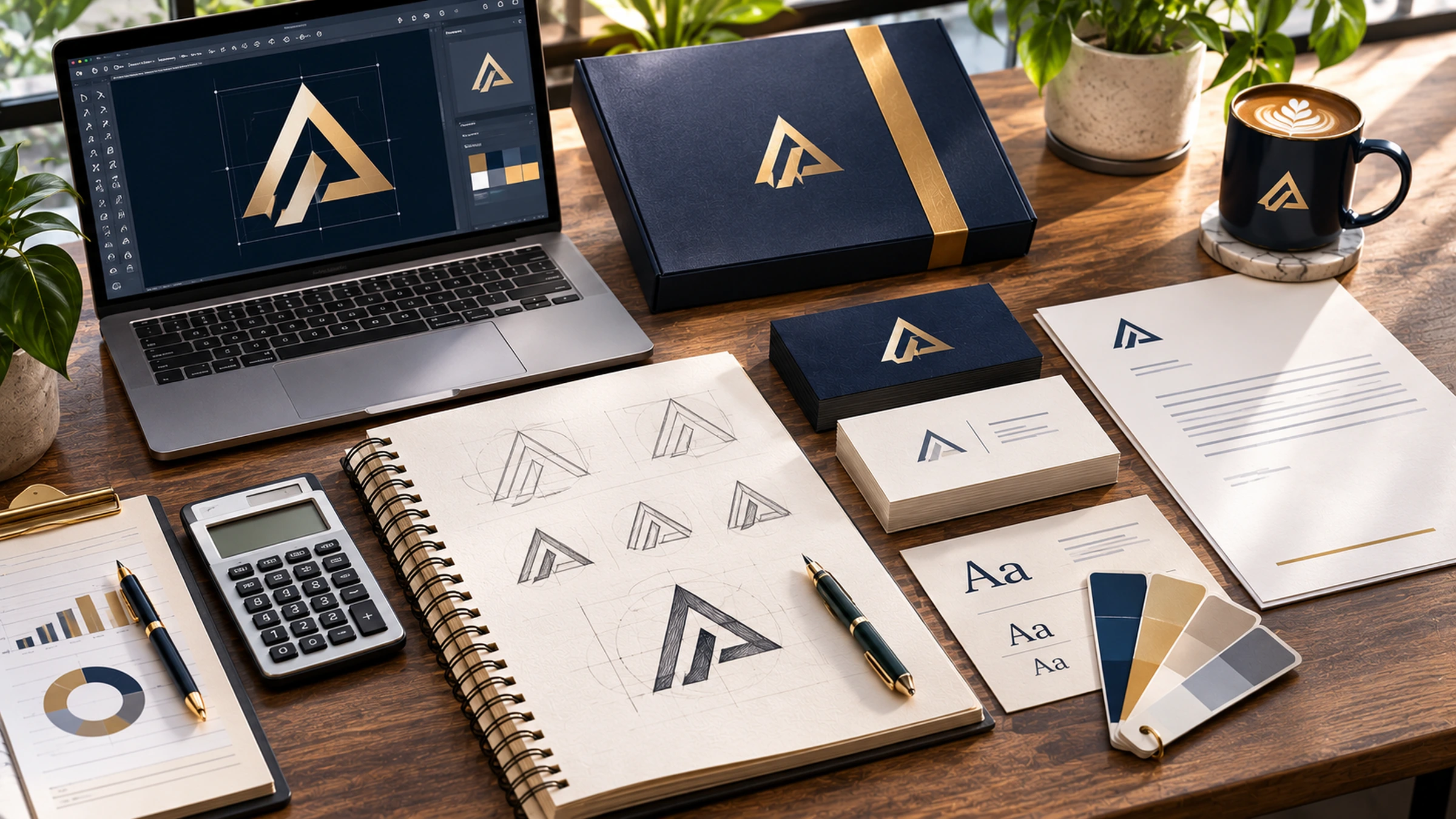
Logo Design: The primary visual symbol representing your business.
Brand Colors: A consistent color palette that reflects your personality.
Typography: Fonts used across your website, marketing, and printed materials.
Visual Style: Photography, illustrations, graphics, and design elements.
Brand Voice: The tone and language used to communicate with customers.
Brand Guidelines: Rules that keep your visual identity consistent.
Together, these elements help create a recognizable and professional business image.
For example, a luxury skincare company may use elegant typography, muted colors, and minimal packaging, while a children's entertainment brand may choose playful illustrations and vibrant colors.
Both approaches can be effective when aligned with the business's target audience.
2. Why Professional Brand Identity Matters
Your brand identity influences how potential customers perceive your business.
A professionally developed visual identity can help create a positive first impression and make your business easier to recognize.
Builds Customer Trust
Consistent branding communicates attention to detail.
When your website, social media pages, business cards, and marketing materials share the same visual identity, your business can appear more organized and established.
Makes Your Business Memorable
Customers encounter many brands every day.
A distinctive logo, recognizable colors, and consistent design language make it easier for people to remember your business.
Helps Differentiate Your Business
Your products or services may be similar to those offered by competitors.
Brand identity provides an opportunity to communicate what makes your business different.
Supports Marketing Efforts
A consistent brand gives your marketing campaigns a recognizable appearance.
Whether you're creating social media advertisements, email campaigns, or promotional flyers, your branding helps connect those materials to your business.
3. Start With Your Brand Strategy
Before designing a logo or choosing colors, define what your business represents.
Strong branding begins with a clear strategy.
Ask yourself:
What is the purpose of my business?
Who are my ideal customers?
What problems do my products or services solve?
What makes my business different?
What personality should my brand communicate?
How do I want customers to feel when interacting with my business?
For example, a technology consulting company might want to communicate innovation, reliability, and professionalism.
A handmade gift business might focus on creativity, warmth, and personal connection.
Your answers will guide the visual direction of your brand.
4. Design a Professional and Memorable Logo
Your logo is one of the most recognizable elements of your brand identity.
It appears on your website, social media profiles, packaging, business cards, advertisements, and other marketing materials.
A professional logo should be distinctive, versatile, and appropriate for your business.
Characteristics of an Effective Logo
Simplicity
A clean logo is often easier to recognize and reproduce across different sizes.
Scalability
Your logo should remain clear on everything from a small website favicon to a large outdoor sign.
Versatility
A well-designed logo should work in color, black and white, and different background environments.
Relevance
Your logo should reflect your brand's personality and industry without relying on unnecessary decoration.
Originality
A custom logo can help establish a more distinctive visual identity than a generic template.
At Modevo Design, custom logo design is approached as part of a broader branding system rather than an isolated graphic.
5. Choose the Right Brand Color Palette
Color plays an important role in visual communication.
Different colors can create different associations depending on culture, industry, and context.
For example:
Blue: Often associated with professionalism, stability, and reliability.
Green: Frequently used by wellness, environmental, and nature-focused brands.
Black: Common in luxury, fashion, and minimalist branding.
Gold: Often used to suggest premium positioning and sophistication.
Red: Can communicate energy, excitement, and urgency.
Purple: Frequently associated with creativity and imagination.
These associations are not universal rules.
The best color palette depends on your audience, industry, and desired brand personality.
A professional identity typically includes primary colors, secondary colors, and neutral shades that work together across digital and printed applications.
It's also important to consider accessibility and readable color contrast.
6. Select Typography That Represents Your Brand
Typography is another essential part of professional brand identity design.
Fonts influence the appearance, readability, and personality of your communications.
Common typography categories include:
Serif Fonts
Serif typefaces can communicate tradition, elegance, or editorial sophistication.
They are often used by luxury brands, publishing companies, and professional organizations.
Sans-Serif Fonts
Sans-serif fonts often create a clean, contemporary appearance.
They are popular in technology, modern corporate branding, and digital products.
Display Fonts
Display fonts can add personality to headlines and logos.
However, highly decorative fonts should be used carefully to maintain readability.
For most businesses, a consistent typography system with defined heading and body fonts is more effective than using many unrelated typefaces.
7. Create a Consistent Visual Style
A strong brand identity should extend beyond your logo.
Photography, graphics, icons, illustrations, and marketing materials should follow a recognizable visual direction.
For example, a premium interior design company may use architectural photography, warm neutral colors, and spacious layouts.
A sportswear brand may prefer dynamic photography, bold typography, and energetic compositions.
Consistency helps customers recognize your business across different platforms.
Important visual assets may include:
Website banners
Social media templates
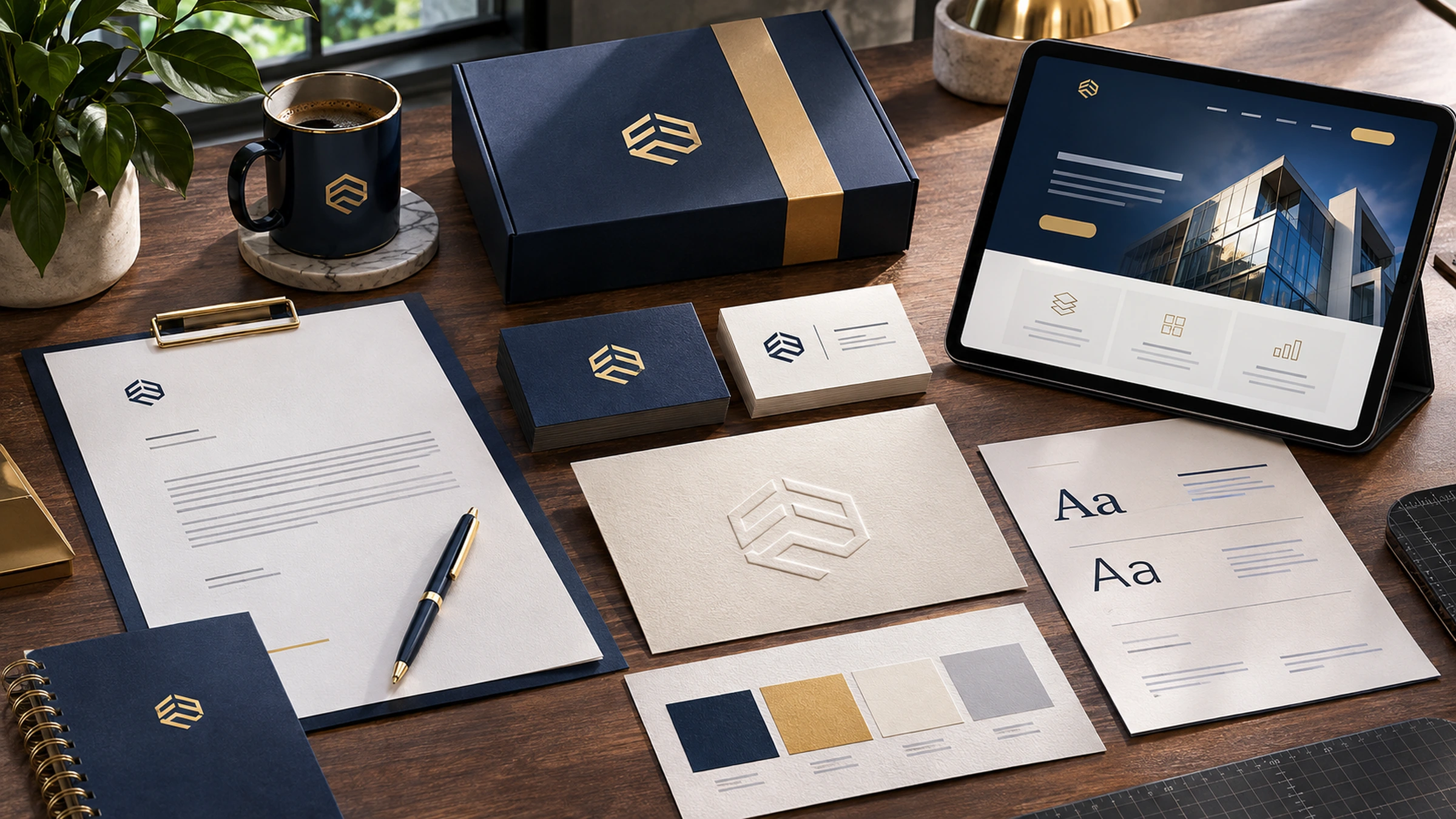
Business cards
Brochures and flyers
Email graphics
Product packaging
Presentation templates
Digital advertisements
These assets should feel like parts of the same brand.
8. Build a Professional Website Around Your Brand Identity
Your website is one of the most important places where customers experience your brand.
A professionally designed website should use your brand colors, typography, imagery, and communication style consistently.
It should also provide a smooth and accessible user experience.
Important website elements include:
Consistent logo placement
Clear navigation
Responsive layouts
Readable typography
Professional imagery
Well-organized service information
Prominent contact options
Clear calls to action
For businesses selling products online, Shopify and WordPress-based e-commerce solutions can also incorporate brand-specific storefront designs.
At Modevo Design, we combine website design, development, and branding to help businesses create cohesive digital experiences.
9. Maintain Branding Consistency Across Social Media
Social media is an important marketing channel for many businesses.
However, inconsistent graphics, changing fonts, and unrelated color schemes can weaken visual recognition.
Creating a consistent social media identity helps establish a professional presence.
Consider using:
Branded post templates
Consistent typography
A defined color palette
Recognizable graphic elements
Professional profile and cover images
Consistent photography styles
Your social media content can vary creatively while still maintaining recognizable brand elements.
The goal is not to make every post identical. It's to make your content feel connected to your brand.
10. Develop Professional Brand Guidelines
Brand guidelines document how your identity should be used.
They are especially useful when multiple designers, employees, or marketing partners create content for your business.
A professional brand guideline document may include:
Primary and secondary logo variations
Minimum logo sizes
Clear-space requirements
Approved brand colors
Typography rules
Background usage
Photography direction
Graphic design standards
Incorrect logo usage examples
These guidelines help maintain visual consistency as your business grows.
They also reduce the risk of inconsistent or incorrectly reproduced branding.
11. Common Brand Identity Mistakes to Avoid
Even businesses with strong products can struggle with inconsistent branding.
Here are several common mistakes.
Using Generic Logo Templates
A widely used template may make it difficult to establish a distinctive identity.
Choosing Too Many Colors
An overly complicated palette can create visual confusion and make brand consistency harder to maintain.
Using Inconsistent Fonts
Frequently changing typography can weaken your brand's visual personality.
Ignoring Your Target Audience
Branding should appeal to the people most likely to purchase your products or services.
Following Every Design Trend
Trends can provide inspiration, but your identity should remain useful beyond a single design trend.
Neglecting Brand Consistency
Your website, packaging, social media, and printed materials should share recognizable design elements.
Avoiding these mistakes can help create a more polished and professional identity.
12. When Should You Consider Rebranding?
Not every business needs a complete rebrand.
However, refreshing your identity may be worthwhile when your current branding no longer represents your company.
Common reasons include:
Your business has changed direction.
You're targeting a different audience.
Your existing logo is outdated or difficult to use.
Your marketing materials lack consistency.
Your business has expanded into new markets.
Your current identity no longer reflects your positioning.
A rebrand may involve updating your logo, colors, typography, messaging, or entire visual system.
Before making changes, evaluate which existing brand elements customers already recognize and value.
13. Professional Branding vs DIY Branding
Online design tools make it easier than ever to create basic logos and marketing graphics.
For early-stage businesses with limited budgets, these tools can be useful.
However, professional brand identity design usually involves more than creating an attractive graphic.
A professional branding process considers market positioning, audience preferences, visual consistency, scalability, and practical applications.
It also produces assets suitable for different environments, including websites, printing, packaging, and social media.
The right approach depends on your budget, business goals, and long-term branding needs.
14. How Modevo Design Helps Businesses Build Strong Brands
At Modevo Design, we help businesses develop professional visual identities and digital experiences.
Our creative services include:
Custom Logo Design
Distinctive logos developed to represent your business and its personality.
Brand Identity Design
Consistent visual systems incorporating colors, typography, graphics, and brand applications.
Graphic Design
Professional marketing materials, social media creatives, banners, and promotional designs.
Website Design
Modern websites that reflect your brand and communicate your services effectively.
Website Development
Responsive, functional websites tailored to your business requirements.
WordPress and Shopify Development
Professional websites and online stores designed around your brand identity.
We work with startups, entrepreneurs, small businesses, and established companies worldwide.
Our goal is to help businesses create recognizable brands and professional online experiences.
Frequently Asked Questions
What is included in a professional brand identity?
A brand identity commonly includes logo design, brand colors, typography, visual guidelines, and supporting graphic elements. The exact deliverables depend on the branding package and project scope.
What is the difference between a logo and brand identity?
A logo is a specific visual symbol or wordmark representing a business. Brand identity is the broader system of visual and communication elements that creates a consistent brand experience.
How much does professional brand identity design cost?
Pricing depends on the scope of work, research, number of design concepts, revisions, and final deliverables. A basic logo project generally requires less work than a complete brand identity system.
Can a small business benefit from professional branding?
Yes. Professional branding can help small businesses create a consistent appearance, communicate their personality, and build recognition among potential customers.
How long does it take to develop a brand identity?
The timeline depends on research, design complexity, feedback, revisions, and the number of required deliverables. Comprehensive branding projects generally take longer than standalone logo designs.
Should my website match my brand identity?
Yes. Your website should consistently use your brand's approved colors, typography, logo, imagery, and communication style to create a cohesive customer experience.
Final Thoughts
A professional brand identity is an important part of building a recognizable and trustworthy business.
From your logo and color palette to your website and marketing materials, every visual element contributes to how customers perceive your company.
The strongest brands are built through clear strategy, thoughtful design, and consistent execution.
Whether you're starting a new business or refreshing an existing identity, investing in professional branding can help create a stronger foundation for long-term growth.
Ready to Build a Brand That Stands Out?
Modevo Design provides professional logo design, brand identity, graphic design, website design, and development services for businesses worldwide.
Whether you need a memorable custom logo or a complete brand transformation, we can help bring your vision to life.
Contact Modevo Design today to discuss your branding project and request a personalized quote.